
 Español
 Pусский
 العربية
 中文
中文

Split Type Tethered Drone Power System
Split Type Tethered Drone Power System: Overview and Advantages A split-type tethered drone power system is an advanced solution designed to provide continuous power to unmanned aerial vehicles (UAVs) through a physical tether, enabling extended flight durations and enhanced operational capabilities. Unlike traditional battery-powered drones, which are limited by onboard energy storage, tethered systems leverage ground-based power sources to sustain flight indefinitely, making them ideal for long-endurance missions. System Architecture The split-type configuration consists of two primary components: 1. Ground Power Unit (GPU): - Houses the power supply, typically an AC/DC converter or generator, which delivers stable electricity to the drone. - Includes power management systems to regulate voltage, current, and safety mechanisms (e.g., surge protection, overheating prevention). - May integrate backup batteries or uninterruptible power supplies (UPS) to ensure reliability during grid fluctuations. 2. Tethered Drone Module: - Features a high-strength, lightweight tether cable that transmits power and, optionally, data between the GPU and the drone. - The drone is equipped with a power distribution board to manage incoming electricity, replacing or supplementing onboard batteries. - Redundant systems ensure fail-safe operation, minimizing the risk of power loss mid-flight. Key Advantages 1. Unlimited Flight Time: - By drawing power from the ground, the drone avoids battery depletion, enabling 24/7 operations for surveillance, communications relay, or security patrols. 2. Enhanced Payload Capacity: - Eliminating heavy batteries allows for larger payloads (e.g., high-resolution cameras, LiDAR, or communication repeaters). 3. Stable Data Transmission: - The tether can provide low-latency, high-bandwidth data links, superior to wireless alternatives in congested or interference-prone environments. 4. Improved Safety and Reliability: - Reduced risk of crashes due to battery failure; the GPU can be easily monitored and maintained. - Quick deployment and retrieval in emergencies via the tether. 5. Cost Efficiency: - Lower operational costs compared to frequent battery swaps or fuel-based systems. Applications - Public Safety: Persistent aerial monitoring for disaster response or crowd control. - Telecommunications: Temporary LTE/5G coverage extension in remote areas or events. - Defense & Border Security: Uninterrupted surveillance with real-time data feeds. - Industrial Inspections: Long-duration monitoring of pipelines, power lines, or infrastructure. Conclusion The split-type tethered drone power system represents a paradigm shift in UAV endurance and utility. By decoupling power generation from the aircraft, it addresses critical limitations of battery technology while offering scalability, reliability, and versatility for demanding applications. As advancements in lightweight materials and power electronics continue, such systems are poised to become indispensable tools in both civilian and defense sectors. (Word count: 500)
Products
Category:
-
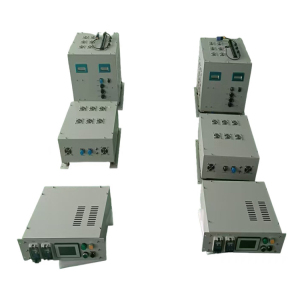
Split Type Tethered Drone Power System
Category: Tethered Drone Power SystemBrowse number: 32Number:Release time: 2025-11-07 11:16:49Independent mooring cable box, power supply box, and control unit are each independent
News
Category:
No search results found!
Case
Category:
No search results found!
Video
Category:
No search results found!
Download
Category:
No search results found!
Job
Category:
No search results found!
Featured Products
-
NEWS
Split Type Tethered Drone Power System
Learn more



 WhatsApp
 Phone
Phone