
 Español
 Pусский
 العربية
 中文
中文

Power Module Design
Power Module Design Overview Power modules are critical components in modern electronic systems, providing efficient energy conversion, distribution, and management for applications ranging from industrial automation to renewable energy and electric vehicles. A well-designed power module ensures high efficiency, reliability, thermal performance, and compact integration while meeting stringent safety and regulatory standards. Key Design Considerations 1. Topology Selection The choice of power conversion topology (e.g., buck, boost, flyback, or resonant converters) depends on the input/output voltage requirements, efficiency targets, and load conditions. High-frequency switching topologies reduce passive component sizes but require careful EMI mitigation. 2. Semiconductor Devices Power switches (MOSFETs, IGBTs, or SiC/GaN devices) are selected based on voltage/current ratings, switching losses, and thermal characteristics. Wide-bandgap semiconductors (SiC/GaN) enable higher efficiency and power density but demand robust gate driving and layout optimization. 3. Thermal Management Heat dissipation is critical for reliability. Designers use thermal vias, heatsinks, or liquid cooling to maintain junction temperatures within safe limits. Thermal simulations (e.g., finite element analysis) validate performance under worst-case conditions. 4. PCB Layout & Parasitics High-current traces must minimize resistance and inductance to reduce losses and voltage spikes. Proper grounding, shielding, and component placement mitigate EMI. Multilayer PCBs with dedicated power and ground planes enhance noise immunity. 5. Protection & Control Overcurrent, overvoltage, and overtemperature protection circuits safeguard the module. Digital controllers (MCUs or DSPs) enable advanced features like adaptive loop compensation and fault diagnostics. 6. Mechanical Integration Compact designs use 3D packaging techniques (e.g., power stacking or embedded components) to save space while ensuring mechanical robustness and vibration resistance. 7. Compliance & Testing Modules must meet industry standards (e.g., UL, IEC) for safety and EMC. Prototypes undergo rigorous testing, including thermal cycling, HALT, and long-term reliability assessments. Applications & Trends Power modules are evolving toward higher efficiency (>98%) and power density, driven by AI-driven optimization, advanced materials, and modular architectures. Future trends include bidirectional power flow for energy storage and AI-assisted predictive maintenance. In summary, power module design balances electrical, thermal, and mechanical constraints to deliver robust, scalable solutions for next-generation energy systems.
Products
Category:
-
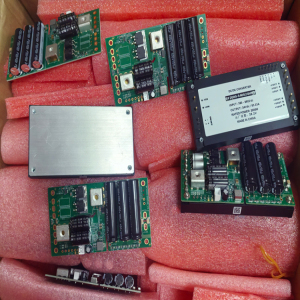
Power Module
Category: Tethered Drone Power SupplyBrowse number: 38Number:Release time: 2025-11-06 17:56:57Introduction: The Heart of Modern Power Systems Power Modules represent the core building blocks of today's sophisticated electronic systems, providing reliable, efficient power conversion and distribution across countless applications. These integrated power solutions combine multiple power components and control circuitry into single, optimized packages that deliver superior performance while reducing design complexity. From industrial automation to telecommunications infrastructure, our Power Modules are engineered to meet the demanding requirements of modern electronic systems....
News
Category:
No search results found!
Case
Category:
No search results found!
Video
Category:
No search results found!
Download
Category:
No search results found!
Job
Category:
No search results found!
Featured Products
No search results found!



 WhatsApp
 Phone
Phone